Monitoring the workload
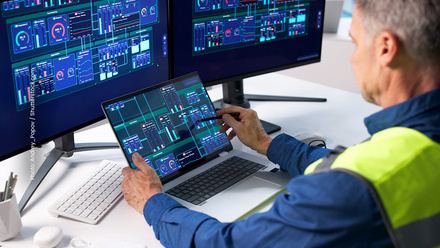
Security surveillance systems often rely on a network of cameras feeding back multiple images to a control centre. The range of sources gives operators simultaneous visual access to a wide variety of locations but they also face cognitive challenges linked to the large volume of information they’re dealing with.
Researchers have explored alternative ways of presenting information that could help operators reduce their cognitive load while still spotting threats.
Drawing on studies that show that visual attention is processed sequentially, rather than simultaneously, they tested a traditional multiple-feed display which showed eight different camera feeds across a grid of six screens. They then compared this to a set-up which featured a single central screen showing just one camera feed, with thumbnail previews of all eight cameras around the edge.
Participants were asked to detect incidents using each set-up and the overall detection rate and number of false alarms weren’t significantly different between the two systems. However, the monoplex option recorded significantly better situational awareness with no perceived increase in workload. In both situations, the longer an incident lasted, the more likely it was to be detected.
The research, published in the journal Ergonomics, said: “Security surveillance systems typically display many camera feeds simultaneously, assuming that more visual information improves monitoring. Our findings challenge this assumption: an interface showing one feed at a time improved situation awareness without increasing workload. Designing interfaces that align with the serial nature of human attention may support surveillance effectiveness.”