Finding the AI balance
As artificial intelligence (AI) takes over more tasks in the workplace, finding the right balance between humans and technology is becoming more important. Effective collaboration between people and machines means balancing performance factors, including speed and accuracy, with psychological needs such as vigilance and wellbeing.
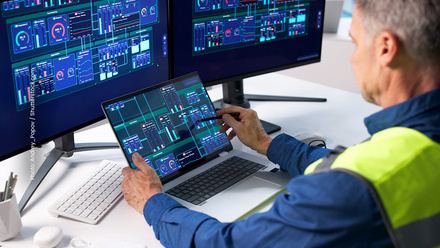
A new study has examined how workflows can be arranged to deliver the most effective outcomes to meet both these demands. Researchers looked at the testing of welds, which need to be continuously inspected to make sure they’re safe and free from defects. The process is time-pressured, and accuracy and a lack of errors is essential.
They found that the human/AI collaboration resulted in fewer errors than AI working alone, but only when AI preceded human processing. The AI-first option also led to higher reported wellbeing scores.
The study, published in the journal Applied Ergonomics, said: “The best results were when the AI inspected first, yielding faster processing, fewer errors than AI-only inspection, and less decline in flow as well as stronger sense of teaming compared to human-only inspection. Conversely, workflows led by humans produced slower performance with more errors and descriptively less teaming experience.”
The research could help design more effective workflows and improve collaboration between humans and AI.
It added: “While classical work design literature emphasises high autonomy, mastery and unique human contribution as cornerstones of meaningful work, our findings point to a more different pattern. In some contexts, synergy, fluency and a performance boost may be even more beneficial for task and collaboration experience. This might be partially due to the short-term perspective of this experiment but could also reflect characteristics of repetitive, rather monotonous work tasks, which may afford positive outcomes in different ways than typically examined complex white-collar work.”